This will be short and sour.
The BBC News Magazine web site has posted an article on the vexed question of toddlers in restaurants. While admitting (as who cannot) that they are a menace, the article goes on to offer an excuse or two for parents who insist on bringing the little beasts along, one of these being the desire to ‘get them used to restaurants’.
Well, I‘ve heard some sorry excuses for self-indulgent doting in my time, but that one takes, if you'll pardon the expression, the cake. Get them used to restaurants? Why, in heaven’s name? So that they can beggar their parents with expensive dining-out bills in early adolescence? Out-gourmet the Guide Michelin before they’re out of secondary school? Or just learn to draw increasingly bitter comparisons between Mum’s cooking and the canard aux herbes Sri lankaise they were served at the Lemon last night?
Do these fond parents really imagine they’re somehow socializing their kids by inflicting them on cringing strangers? What idiots. Toddlers cannot be socialized. They are monsters of id. They aren’t even properly human yet – to all intents and purposes, they’re still little animals, and half-formed ones at that. Besides, research has shown that parents don’t socialize kids; peer groups do. All Mummy and Daddy’s patient training in manners and decorum, all the coaxing and encouragement, all the gatings and punishments, even the beatings used by some parents as teaching aids, count for very little; it’s peer pressure and, a little later, a desire to impress the opposite sex that turns juvenile delinquents (that is, all kids) into socially viable individuals. And even the small contribution parents make in this area cannot begin until a child actually has some consciousness of others’ rights and feelings – a sensibility that does not develop, except possibly with respect to close blood relations, until the kid is well past the upchucking-in-public stage of life. And yes, I know some people never get past it, but that simply means they’re still toddlers in spite of the breasts and facial hair. This is true even if the breasts and facial hair are both on the same person.
Anyway, we all know this twaddle about getting children used to restaurants is just a lame excuse. People bring their toddlers to restaurants for one of two reasons: (1) they are so besotted by the issue of their loins that they cannot bear to be away from them for ten seconds or (2) they have run out of volunteers – even paid ones – for the job of babysitter. In the first of these cases we are clearly dealing with some sort of compulsive pseudonarcissistic disorder, requiring – oh, I don’t know, electroshock therapy and institutionalization, with the kids being taken into care, preferably at some remote, Spartan orphanage. In the second, you and I will be dining next to the quelled and demoralized parents of one or more pint-sized psychopaths, and we might not leave the restaurant alive.
There is absolutely no excuse for bringing children under the age of, say, five, to restaurants. Restaurants are adult places. Adult things are done in them – business, mutual social grooming, status competition and, above all, sex. Restaurants are vital, indeed sacred, to the central ritual of human mating – the gifts of food with which males of our species and its forebears have courted females for at least five million years. No-one, not even the broodiest biological-clock-obsessed thirtysomething woman, wants to be reminded of the consequences of courting and mating while engaged in the actual activity. The presence of children at such occasions is a turn-off comparable with a skip-load of offal being overturned next to one’s table. Indeed, the effect (and the smell) are often identical.
To encourage the restaurateurs of the world to come to their senses and impose a blanket ban on customers under the age of five, I propose that sane adults – which is to say, those unencumbered with children – take certain steps. These will include refusing to sit near family parties with small children, or better still, insisting that they be seated somewhere the sight, sound and smell of the little brutes will not offend other diners’ sensibilities. A quiet back-alley location, behind the restaurant among the garbage cans, would probably be best; as a second option, the manager’s office will do nicely. One might also refuse to pay one’s addition on the grounds that one’s health and appetite have been impaired by the stress of having to eat in public among small children, and furthermore forward any medical or psychiatric bills incurred over the following days to the restaurant management; but best of all, I think, will be to form a lobby group and organize restaurant boycotts. I shall shortly commence a canvass of friends, relatives, correspondents and Facebook hangers-on with this end in view.
As for the offending parents, they will just have to be sent to Coventry, won’t they? There or Siberia.
17 February 2011

14 February 2011
The Voynich Review
 |
| The 'Galaxy' diagram from the Voynich Manuscript (left-hand page). Note dark blot in approximate location of Sol. |
The Voynich Manuscript is in the news again, this time because a team of scientists has established that it is at least a hundred years older than previously believed. If you haven't already heard of this mysterious and somewhat creepy document, the first link above will tell you all you need to know about it, and this one will allow you to view the Manuscript for yourself (just click on the pictures to see entire chapters). It is, quite possibly, the strangest book in the world.
Out of curiosity, I searched for it on the Goodreads website, where I'm a member, and to my astonishment found there actually was an entry for it. This being an opportunity far too good to pass up, I proceeded to write a review of the Manuscript, awarding it five stars. For your amusement, I reproduce this below. The idea that one of the diagrams represents the Galaxy is not mine; it originates, as far as I know, in this post on abovetopsecret.com.
A Review of the Voynich Manuscript
No-one who has read this marvellous text could possibly fail to be captivated by its thesis and convinced by its arguments. Diego Almodovar, in his encyclopaedic critical survey of unread and undiscovered texts, Scriptorium Incognitum, devotes an entire chapter to the Voynich Manuscript, following what he calls the 'golden thread of induction' that runs through, and ties together, the various sections modern scholars have dubbed 'astrological', 'cosmological' and 'biological'; he claims that this conventionally indecipherable narrative develops an empirical proof of the alchemical principle, 'as above, so below'.
Almodovar refuses to speculate, however, on what might be the exact subject of the Manuscript and gives no precise listing of its contents. He disagrees with the various assertions of Kircher, al-Khimidi and others who have given their own opinions on the matter. Like Aldomovar, I too am convinced that until the recondite script in which the Manuscript is written is finally translated into a modern language, there is simply no point in making claims in this regard. It suffices merely to read it in the original, making use of the appropriate portion of the Key of Solomon to do so, and absorbing its message within its own peculiar context: that of a culture, indeed a race unknown to us, of whose provenance the only clue we have yet been able to decipher is the fact that one of the diagrams in the 'astrological' portion, when reversed as if viewed in a mirror, is clearly a diagram of the Galaxy with the position of our home star rendered as a broad black dot - more properly described as a blot - and on which a constellation of smaller dots appears in a location almost diametrically across the Galactic centre from Sol.
If, as it appears, the original diagram is in fact a very large-scale map of the Galaxy viewed from a point several hundred light-years south of the galactic plane, then one among this constellation of dots (which the careless scholar might dismiss as fly-specks or the results of a carelessly shaken fine quill pen) may indeed indicate the place of origin of the manuscript, or of its author, or of some being known to the author. Given the late mediaeval provenance of the Voynich Manuscript, this interpretation of the diagram raises a number of fascinating questions. These the text of the document answers satisfactorily, and I would write the answers here but for the difficulty of translating them into any known human tongue.
It is said that the great Argentinian author Jorge Luis Borges was familiar with the Manuscript, and was inspired by it to write such well-known works as 'Tlön, Uqbar, Orbis Tertius' and 'A New Refutation of Time'. However, it is not known when, where or by what agency Borges obtained a copy of the manuscript; it is certain he had no access to the original. This is, however, the least of the mysteries the Voynich Manuscript holds for us. I give this book (more properly, this codex) a richly earned five stars.
01 February 2011
The Angels Still Watch O’er Us

Alex Stewart was nearing the end of a long, difficult period of personal change and reappraisal when he first visited Sri Lanka in 1995. He may have felt that a change from his usual London scene would be good for him, and so it turned out. Stewart found his artistic vocation awaiting him here; and with it, a measure of peace of mind and zest for life, things he had thought lost to him for ever.
 Such is the story I have heard about Alex Stewart, with whom I am lightly acquainted in a social way, not at all intimately. In other words, it is gossip and may not be true. Whether it is true or not I really have no idea, but when I look at his paintings of Sri Lanka I think it might be. They illustrate what certainly appears to be a special relationship. Then again, if you look at his paintings of Indian scenes and subjects, they’re pretty similar, superficially at least, to the Sri Lankan ones. How many special relationships can one man have? Does it matter?
 Stewart is, as far as I can tell about these things, a surrealist. Which is to say that his paintings, although figurative, seem to straddle the boundary between reality and fantasy. I suspect this boundary is not fixed as rigidly in the painter’s mind as it may be in yours or mine; in his work it seems permeable, or capable of shifting back and forth, or sometimes, disconcertingly, not to be there at all. Then again, he is on record as saying – in reference to other work, not his Sri Lankan oeuvre – that ‘permission was the key, permitting myself to draw an internal world,’ suggesting that he does discriminate between interior and exterior realities. In a similar connexion he also speaks of depicting ‘the backlot of the mind’s film set, a series of images which when juxtaposed in an infinite combination provide clues and stories to... life experience.’ Perhaps, then, the Sri Lankan and Indian paintings depict the set itself, the film captured in performance – the life experience?
 There is no doubting that the plot is to some degree autobiographical. Stewart isn’t afraid of painting himself, and often appears as a recognizable character in his own work. There he is, pinkish, balding and looking ever so slightly out of place among the sari-draped angels, flying tuk-tuks and the rest of the tropical surrealist jamboree. What’s he doing there? What’s the story? Work it out if you can, or just make something up.
 It would take a better-educated, more perceptive intelligence than mine to parse the grammar of Stewart’s work. Some scenes appear to be just what they are and no more, others are quirky or bizarre without necessarily seeming to refer to anything beyond the frame of the picture, and yet others are clearly freighted with history and personal meaning for the artist but refuse to yield them up readily to the viewer. Maybe I just haven’t looked and thought hard enough, being too taken by the beauty of what I see bother much with the meaning of it. I suspect the artist will think this is fine.
 I really don’t think analysis is the way into the art of Alex Stewart. It’s more about the experience. His paintings are enchanting things, not just easy on the eye but on the heart. Looking at them, I actually feel myself becoming calmer, a gentler person, at least for the duration of the experience. There is something essentially good – morally speaking – about them. Acknowledging the existence of loss, sorrow and wickedness in the world, they reassure us still that these evils are not the whole of life, that indeed, despite their enormous temporal salience and power, they may not matter nearly as much as we think or fear they do. Even in his latest and most sombre collection, which has its première at the Barefoot Gallery this month, the angels still watch over us, and the tuk-tuks still ascend the path of their own headlamp-beams to heaven while their drivers, asleep in the back, dream prophetic dreams. Deep and holy mysteries hide everywhere beneath the mundane surface of things; we need not fear them so long as we respect them. Approached the right way, they are nurturing, fruitful, even benign. It says on Alex Stewart’s curriculum vitae that he is a therapist; certainly, I find looking at his paintings therapeutic. Maybe he finds painting them therapeutic, too, even if the work is not always easy.
 Surrealism, as a rule, mocks or attempts to rearrange the ancient relationship between art and the sacred. Alex Stewart’s paintings, though they partake, at least compositionally, of some of the automatism of the surreal, do the opposite: they reaffirm the relationship. The characters and scenes in them come from a holy place: a very special, mythical island of Lanka that only exists as a sort of epic poem inside the artist’s mind. It is a kinder, gentler and holier place than the wretched, plundered, ruined island of its inspiration ever will be again. Long may it endure.
 Once Upon A Time, an exhibition of paintings by Alex Stewart, is at the Barefoot Gallery, Colombo, 11-27 February 2011.
09 December 2010
Down the Drain with Wikileaks
 Whistleblowing is good when actual wrong has been done, but governments and businesses cannot function without privacy any more than individuals or families can. When people don't feel comfortable talking off the record, or when they fear they might be endangered by it, they stop talking, and mutual misunderstanding and suspicion ensue.
Take the revelation that Hillary Clinton had inquired of her aides whether Christina Fernandez was on medication and if so, how the meds affected her decision-making. It's a perfectly legitimate question for a secretary of state to ask before meeting the president of a foreign country. Yet Ms. Fernandez is hardly likely to be pleased to learn that it was asked, and this makes relations between Argentina and the US ever so slightly more difficult. Much worse would be the consequences of harsh words used by US diplomats (in a confidential discussion) about the chief Chinese representative at the Six-Party Talks over North Korea, and the revelation that some American diplomats think an important Turkish minister is a bit of a closet Islamic extremist. Publicizing such matters makes the going along the rough edges of international relations just that much rougher--and makes the world a slightly more dangerous place.
Back on the home front, what good purpose is served by making public the knowledge that some American diplomats in Colombo, at least, believe that President Rajapakse and his military commanders are guilty of war crimes? It is not as if the news is going to change the views people already hold. It may briefly put fresh heart into human-rights campaigners and civil-society activists, but its practical consequences are all negative: they consist mainly of increased friction, distrust and resentment between Sri Lanka and the US, and between Sri Lanka and the west in general. It will make working towards final reconciliation and accountability harder than ever. That benefits nobody.
'Freedom of information' also means freedom for information to flow. By turning itself into an obstacle to its free passage in this way, Wikileaks has made the world a shadier, more secretive place. This is nothing less than a terrorist attack on civilization. It will have a far greater impact, in the long term, than 9/11 ever did or could. And it is not just the West that is the victim here. It is everybody.
01 December 2010
Solar: Not Stellar
 Ian McEwan is, in one sense at least, the best prose craftsman now working in English. That sense is finish; his writing is like a perfect cabuchon-cut jewel, slick and flawless; or like a perfectly aged brandy, so smooth you hardly feel it as it goes down.
Unfortunately, I find that the impression it leaves behind, at least with me, is also as ephemeral as the effect of fine brandy: a slight hangover the day after, and then gone for ever. I've enjoyed nearly every book of his I've read, as long as I was reading it. A month after I'd finished it, though, I could remember little of plot, character or indeed, anything else. Surely this can't be good?
Solar, however, is a book I will remember, because it is the first time Ian McEwan has completely failed with me. I think I understand the trick he's trying to pull off here: create an unsympathetic character, one deserving of nothing better than pity or contempt, and try to interest the reader in him, even feel some sympathy for him in spite of his faults. It doesn't work. Michael Beard, the Nobel-prizewinning protagonist of Solar, is a gluttonous, womanizing slob to whom essentially unbelievable things happen, and not very interestingly. We are privy to his thoughts most of the time, but these neither bring us any insight into his creepiness that would help us understand him and possibly empathize, nor do they seem to me like the workings of the mind of a physicist--unless physicists' minds work just the same way as everyone else's, which may be the case most of the time but surely not all of it. The fact is, Michael Beard doesn't seem very intelligent at all. Is that McEwan's point, then? That Nobel-prizewinning physicists are just the same as all of us, only intermittently bright and otherwise slaves to their passions and habits, not very interesting apart from their work? We knew the first already--it's a truism of the most banal sort--and as for the second, it's a lie. People like Einstein, Dirac, Feynman and Bohm were far from uninteresting as human beings. They were all, in their different ways, a little bit peculiar. There is nothing in the least peculiar about McEwan's physicist creation Michael Beard.
Somewhat to my astonishment, I actually found myself speed-reading the last third of Solar, just to see whether anything worthwhile would happen in the end (nothing did). Speed-reading Ian McEwan! Has it come to this?
24 November 2010
Too Many Cameras
I never carry a camera. I used to boast that I didn’t need to, because whenever I was somewhere a picture needed to be taken, there was always a competent photographer at my side to take it. I was married to a first-class amateur for seven years, and a lot of my sightseeing in the world’s picturesque and interesting places has been in professional association with the incomparable Dominic Sansoni. On wilderness outings in Sri Lanka, too, I have always been able to leave the photo-catching in the practised, unobtrusive hands of others. This has left me free to do what is incumbent on me as a writer: experience the moment with all five of my senses, not just one, recording it holistically and subjectively rather than objectively and in detail – later to write about it and perhaps, if the Muse wills, bring to it some perspective or insight that could never be caught on camera.
 |
| Real photographers can't spell |
In those days, I was always happy to have a photographer by my side. To state the obvious, photographs are useful – for recording events of significance, briefly returning to life the revenants of fond or fervent emotion, acting as a spur or corrective to memory, or conclusively settling an argument. Such things are, or can be, important. But this, of course, was in the days before PhotoShop. Nowadays, photographs, and by extension photographers, cannot be trusted. It may be argued that this unreliability, never perfect in the days of film no matter how the retouchers laboured, may at last have brought the photographer’s art to maturity, for the mission of all artists is to tell the truth by lying. However, it isn’t the new untrustworthiness of photographs that has brought me to resent photography and abhor photographers in general (though there are a few, including the aforementioned, whom I still respect and admire). No, it was the thing which made the trompe l’oeil of PhotoShop possible in the first place, and turned the act of taking a photograph, formerly a considered action requiring time and thought, into a perverse reflex, a nervous tic, a pathological symptom. It was the replacement of film by digital image capture as a recording medium.
Yes, I know you can do wonderful things with digital cameras. The pictures they take are now almost as good as the ones taken by film cameras – better, for all I know, since technology marches on and I have had better things to do than pay attention. Moreover, these pictures, being recorded merely as bits of information, can be stored, transferred, processed, manipulated and reproduced in their millions with the greatest of ease. The revolution has been total. Hardly anyone, barring a few specialists, purists and fanatics, uses film nowadays. An entire industry – photo processing and printing – has crumbled to dust, and the shops (‘studios’ in Ceylon patois) that used to engage in it have vanished from the high streets of the world. Not that I miss them, particularly; I don’t suppose anyone does, apart from the poor saps who made a living out of them. It isn’t nostalgia that makes me mourn the disappearance of film, it’s the offensive ubiquity of photography and photographers that digital technology has made possible. When Sting made that comment about ‘too many cameras and not enough food’ thirty years ago in Driven to Tears, he was really complaining about something else; digital photography was in its infancy back then. But the remark acquired greater pungency after its advent: there are many, many more cameras today than there were in 1980, and as for the food – we’re it, and they’re fighting over us.
 |
| Kalpitiya sunset by reformed former shutterbug. Yes, it's a great shot. |
In the days of film, the chances of this kind of thing happening to you would have been low, unless you happened to be sharing some well-trodden beauty spot with a pack of Japanese tourists. Film cost money, you see, and you didn’t want to waste it. You took thought before you took a photograph. With the advent of digital image capture, this economic disincentive has vanished. It now costs as much to take a thousand photos as it does to take one, so people do. Everybody is doing it. And – let’s be fair – everybody is probably a slightly better photographer as a result, because practice always makes for improvement, even if it does not always make perfect. But this is of no consequence, because the high tide that lifts all boats also lifts the bar, so to speak, and no relative eminence is gained by anybody. Instead, what has occurred is a kind of creative inflation, in which the currency of the image has become devalued.
 |
| A better photographer than he looks, not that he looks bad |
In the years since that distressing event at Kalpitiya, everyone, it seems to me, has become a photographer. Nearly every young person with creative pretensions carries a camera these days, and many of them plan, sooner or later, to make a living out of the pictures it takes. The poor fools have forgotten the basic economic law of supply and demand. When taking pictures is as easy as raising a camera to your snout and pushing a button, pictures become as common as dirt, and about as valuable. This is something I can vouch for at first hand, because I work in a media-related business that uses both stock and commissioned photography. We simply aren’t willing to pay as much as we used to for good images, and sometimes we aren’t willing to pay at all, because there’s so much usable stuff available out there for nothing. The glut of photographs, of available photography, is putting the professional photographer out of business. Why bother with them and their inconvenient, expensive demands, when photography has become commoditized?
As for me, I remain a lover of good photographs, which I believe have nothing to do with the subject of the picture and everything to do with the person taking them. There will always be those who bring something unique and worth having to the art of photography. The present ubiquity of shutterbuggers will not significantly increase their number, however. Nature, or providence, or chance or what have you, doles out talent with a parsimonious hand. I know a handful of young photographers with genuine talent; one of them was among the posse who so annoyed me at Kalpitiya (and has since returned to that location with exquisite results), another is this guy. Both of them are currently engaged in discovering how hard it is to make any kind of living at photography nowadays, even when you have genuine ability – and neither of them seems to have yet mastered the essential trick of getting out of the way of their own pictures. Still, they’re well ahead of the pack. My advice to them is: go out and murder as many shutterbuggers as possible. In doing so you will revive the market for quality professional photography, and you will also make one cantankerous old scribbler very, very happy.
18 November 2010
The South America Programme
We’ll get to the Great Novels another day. What I have to offer you today is a voyage to South America in the form of three favourite works of non-fiction. If you will read them in succession, and in chronological order, I think I can promise you a fascinating and remarkably affecting experience.
 |
| Galapagos finches' heads drawn by Charles Darwin |
There is a further treat in store for those who know a little about geology: Darwin’s Lyellian speculations are hilarious.
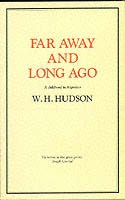
The second book is a curiosity: Far Away and Long Ago by W.H. Hudson tells the story of the author’s life from infancy to manhood among the pampas of Argentina, and later (and tragically) in its cities. Hudson was a kind of nature-mystic, though he didn’t write of his experiences in specifically spiritual terms—he just thought that was the way everyone perceived the world, that it was normal. And reading him, you can almost believe that once upon a time, out on the plains of Africa before sowing and reaping were invented, it was normal. People talk about ‘luminous prose’, but Hudson’s writing seems to describe a landscape that is itself luminous, that does not merely reflect light from the sun and moon but glows with its own. But in truth this light is also a reflection; it’s soul-light, and Hudson himself is the source. Far Away and Long Ago is no namby-pamby pastoral, though; some of the scenes are bloody, violent and terrifying, and towards the end of the book the author’s struggles to make sense of human society (of which his childhood on the pampas has taught him nothing) are heart-rending. This is a very strange book, written by a very odd man, that made its place in English literature purely on its merits and despite being unlike anything else that had ever been written. John Galsworthy described it as ‘a vision of natural beauty and of human life as it might be, quickened and sweetened by the sun and the wind and the rain, and by fellowship with all other forms of life.’ He called its author ‘a very great writer... the most valuable our age has possessed.’
 |
| Bruce Chatwin, taking a hike as usual |
Of course, it is all illusion; Chatwin was a complex and very urbane man who lived his life in compartments and enjoyed generating an air of mystery. And in fact, he seems to have had much to hide. Even his long hikes have a certain improbability about them, as he mysteriously appears on the road to so some Patagonian village or Aboriginal settlement in Australia as though beamed down from a Culture starship, walks up to the first front door he sees and knocks on it. As Paul Theroux, another great traveller, complained, ‘life was never so neat as Bruce made out.’ But that goes back to my earlier remarks about the habitual untruthfulness of fictioneers. You should never really trust us, however convincing our stories may be. In fact, the more convincing the story, the less you ought to believe it.
Taken together, these three books make up my basic literary geography of South America. It is a mystic land, but in a Spinozan kind of way its numinosity inheres in the material reality of it, its rocks and hills, its plains and forests, its plants and animals and the seasons that govern their lives. It possesses the inhabitants of the land and makes them one with it. And it is a country of the mind, not of the earth. Whether or not the real South America resembles it I have not the slightest idea, and perhaps I will never find out. But this does not really matter. Imaginary countries are the most hospitable of all.
Subscribe to:
Posts (Atom)